
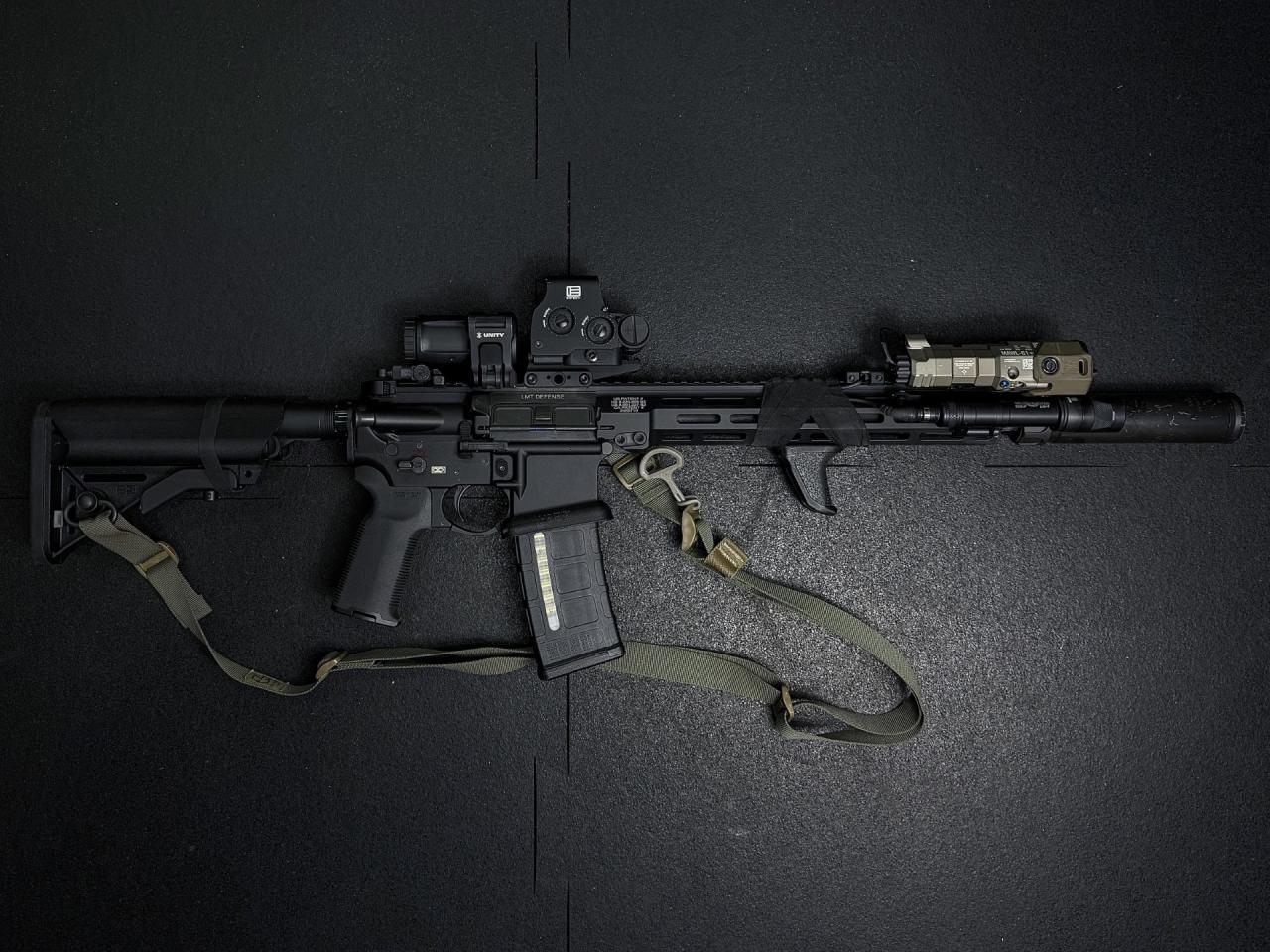
Night Vision Fighting Rifle
Lewis Machine & Tool occupies a rare position in the modern firearms landscape. While many manufacturers chase trends or civilian aesthetics, LMT has historically built rifles for institutional and military clients first — allowing the civilian market to benefit downstream. The SpecWar platform is not a product of consumer demand, but a natural evolution of LMT's work on monolithic upper receivers, enhanced bolt carriers, and quick-change barrel systems originally designed for hard military use.
The SpecWar emerged from a requirement set focused on extreme rigidity, repeatable accuracy, suppressed reliability, and modularity — without sacrificing durability under sustained fire. It draws its lineage from LMT's MRP (Monolithic Rail Platform) system, first fielded to provide a more structurally rigid alternative to conventional two-piece receiver and rail systems.
At the heart of the SpecWar is LMT's monolithic upper receiver — machined from a single billet of aluminum rather than assembled from separate receiver and handguard components. This design provides three critical advantages: rigidity, zero retention, and thermal stability.
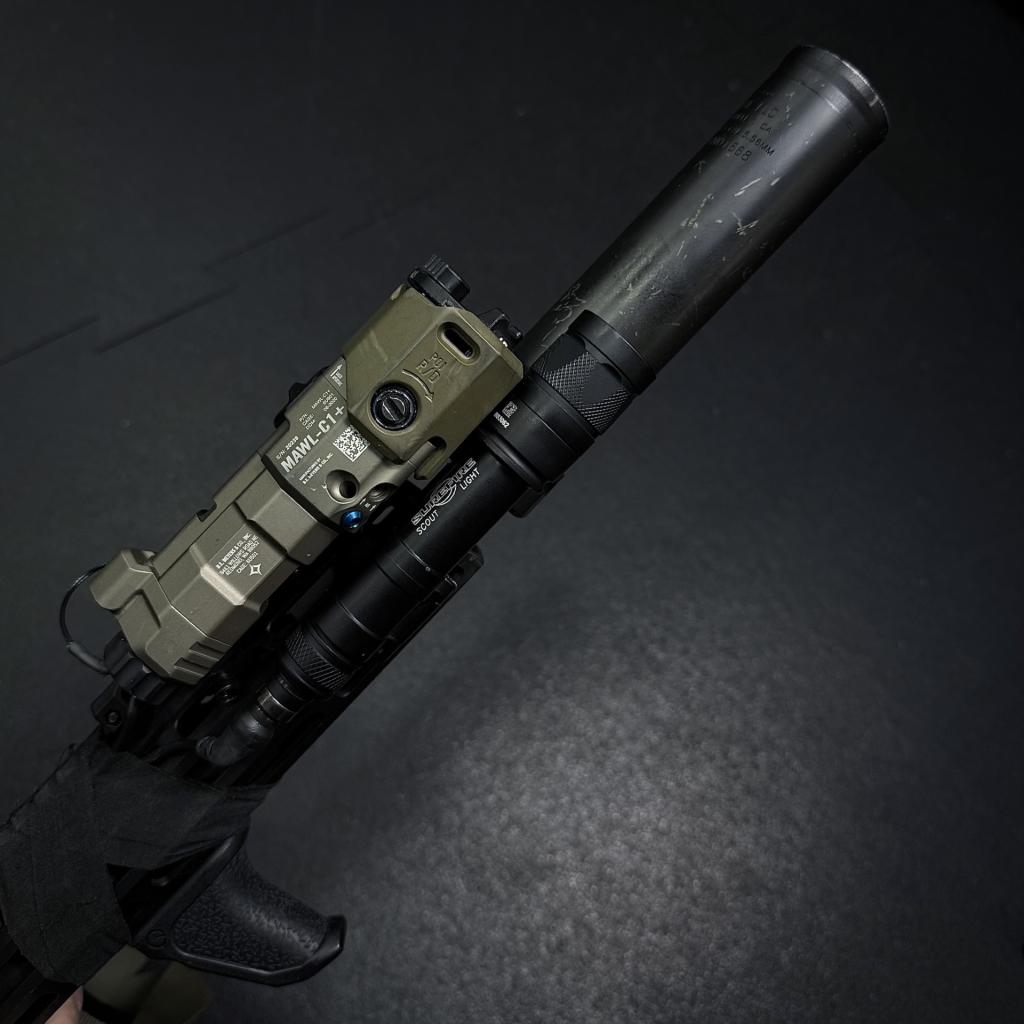
Where lasers, illuminators, and clip-on optics rely on rail stability, this rigidity is non-negotiable. The SpecWar rail does not shift under load, heat, or impact. When you mount a laser — in my case a BE Meyers MAWL — you are mounting it to one continuous structural unit rather than a collection of fasteners and interfaces. That matters at 2 a.m. when your zero is your life.
LMT's quick-change barrel system is often misunderstood as a convenience feature. In reality, it is an accuracy and maintenance advantage. The SpecWar uses precision clamping rather than traditional barrel nuts, allowing barrels to be removed and reinstalled while maintaining return-to-zero within acceptable tolerances for duty use.
In my case, I run a second 300BLK barrel converted by DWilson for when I want to get genuinely quiet. Switching calibers does require re-zeroing efforts — nothing dramatic, but worth knowing. Both barrels have been tuned with BRT gas tubes, which I cannot recommend highly enough for any LMT owner. They come a bit gassy from the factory, and the BRT is the single best upgrade you can make to the platform.
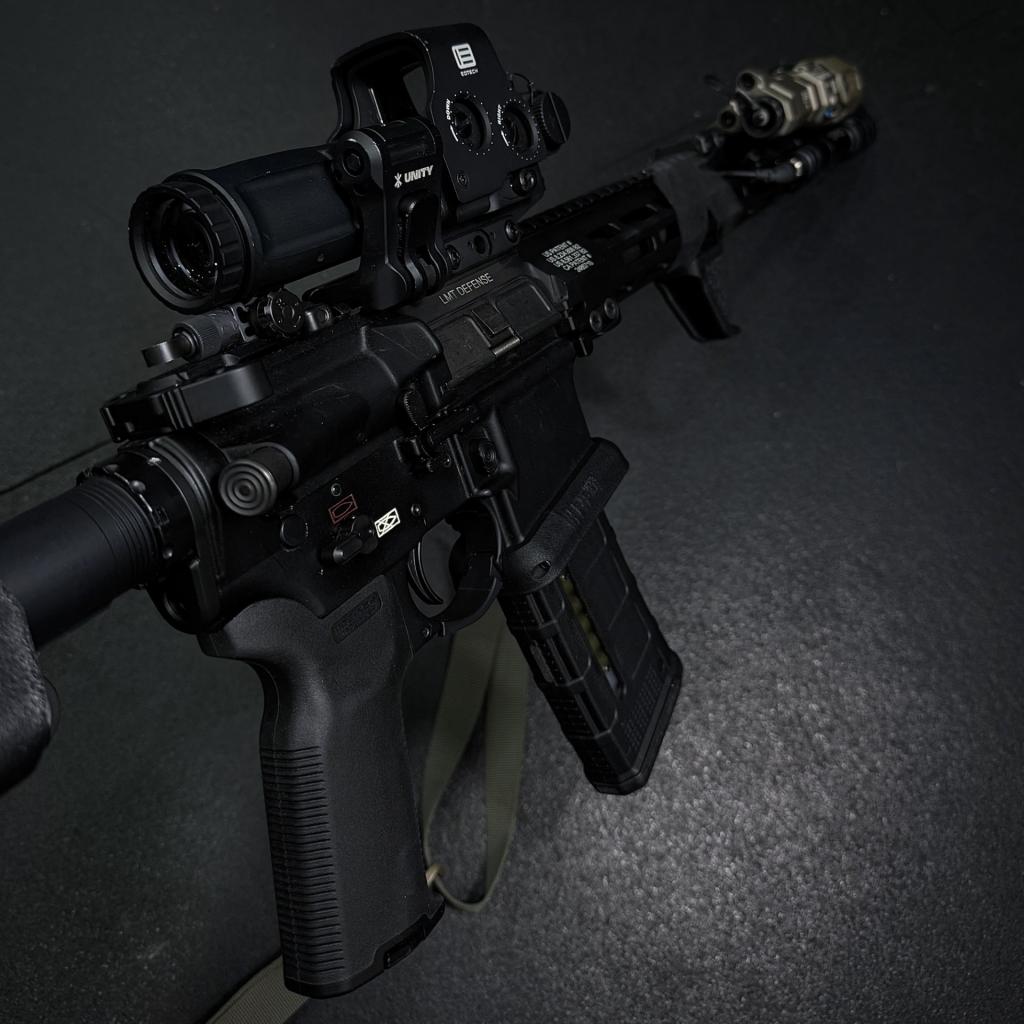
Every component on this build was chosen specifically for working under nods. Starting from the optic and working outward:
In selecting a dedicated night vision fighting rifle my criteria were simple: absolute reliability suppressed, rail rigidity for laser use, controllability under nods, and long-term durability under real training volume. The SpecWar checked every box without compromise.
Unlike lightweight competition rifles or "duty-inspired" civilian carbines, the SpecWar is unapologetically built for sustained operational use. It is heavy where it should be, rigid where it must be, and refined where others are crude. This is a rifle designed to survive hard use — not just look good in kit photos.
| Spec | LMT SpecWar |
|---|---|
| Barrel | LMT 12.5" Chrome Lined 5.56×45 — 1:7" RH Twist |
| Fire Modes | Safe / Semi / Full Auto |
| Gas System | Direct Impingement — BRT Tube, tuned for suppression |
| BCG | LMT Enhanced Full-Auto BCG |
| Buffer | Geissele Super 42 Spring + H2 Buffer |
| Optic | EOTech EXPS-3 on Unity FAST Riser |
| Magnifier | Unity 4x |
| Laser | BE Meyers MAWL C1+ |
| Light | SureFire M640 Scout — KM2 Head, Unity ModButton |
| Suppressor | SureFire RC3 |
| Alt Barrel | DWilson 300BLK Conversion |
| Weight | A lot. |
SUN: BY APPT.
MON-TUES: 12PM - 6PM
WED-FRI: 10AM - 6PM
SAT: 10AM - 3PM