
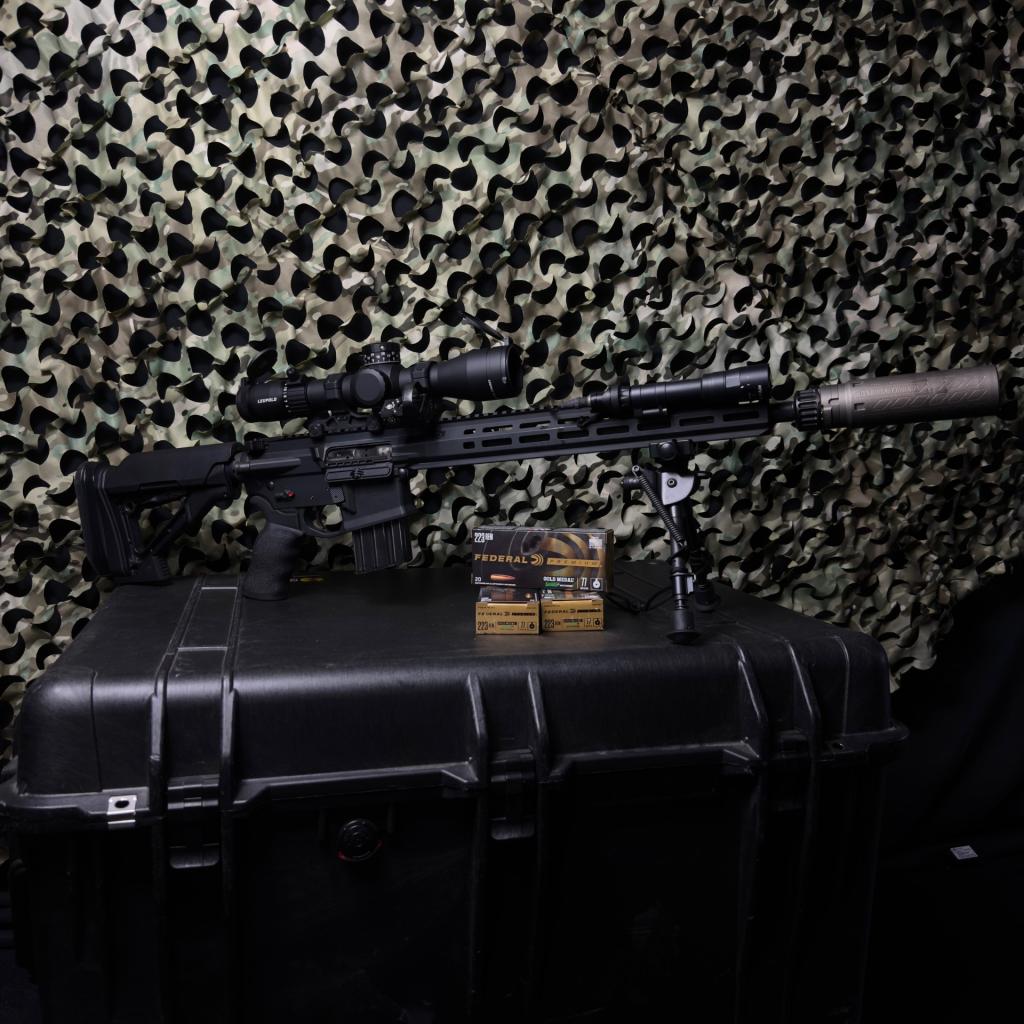
Purpose-Built Precision
Ridgeline Defense is not a manufacturer that decided to get into precision rifles because the market looked good. They are, first and foremost, a precision rifle training organization — and one of the most credentialed in the country. Their training staff has won or placed top five at every one of their eight appearances at the U.S. Army International Sniper Competition and the USASOC Sniper Competition. They train over 500 precision rifle shooters per year, ranging from Special Operations units to civilians who are serious about performance.
That context matters enormously when evaluating the RD-15. This rifle was not designed to create sales. It was designed to solve problems their instructors and students encountered repeatedly on the range and in training. Every engineering decision on the RD-15 was made by people who understood what failure modes look like when precision matters under pressure. The result is a rifle that addresses the fundamental shortcomings of the AR-15 platform for precision work — from the receiver interface down to the gas block.
The standard AR-15 free-float handguard attaches to the barrel nut. That sounds fine until you understand what it means for precision: the handguard is touching the barrel nut, which is touching the barrel, which means any pressure on the handguard — from a bipod, from your support hand, from a bag — creates a flex point that shifts your point of impact. Ridgeline eliminated this entirely.
The RD-15's 7075 T6 billet aluminum upper receiver is elongated to extend rearward and provides a semi-monolithic design where the handguard attaches directly to the upper receiver itself — bypassing the barrel nut completely. Zero barrel contact. Zero flex transfer. When you put pressure on the handguard from a bipod or a bag, that force goes into the receiver, not the barrel. This is the single most important engineering decision on the platform, and it is why the RD-15 ships with a sub-MOA target from the factory.
The barrel is a PROOF Research 416R stainless steel blank with cut rifling — not button rifling. Cut rifled barrels are stress-free from the manufacturing process, which means more consistent performance as the barrel heats up. The chamber is .223 Wylde, which accepts both .223 Remington and 5.56 NATO while maintaining the tighter .223 chamber dimensions for accuracy. The gas system is intermediate length, a deliberate choice that reduces the dwell time compared to a rifle-length system, keeping the BCG velocity in check for softer recoil and more consistent extraction under suppression.
The gas block is built from 17-4 stainless steel — specifically chosen to match the thermal expansion properties of the stainless barrel. It uses an indexing tab and dual-taper attachment with a jam-nut that threads onto the barrel itself, eliminating set screws. The result is a completely sealed system with consistent gas volume shot to shot, which matters enormously when running suppressed where back-pressure can vary significantly with standard gas block designs.
The handguard runs full-length RRS-Lock ARCA at 6 o'clock natively. This is not an aftermarket addition — it is integrated into the platform. It was designed to accept an RRS ARCA adapter or any ARCA-compatible component directly, without a separate rail section or adapter plate.
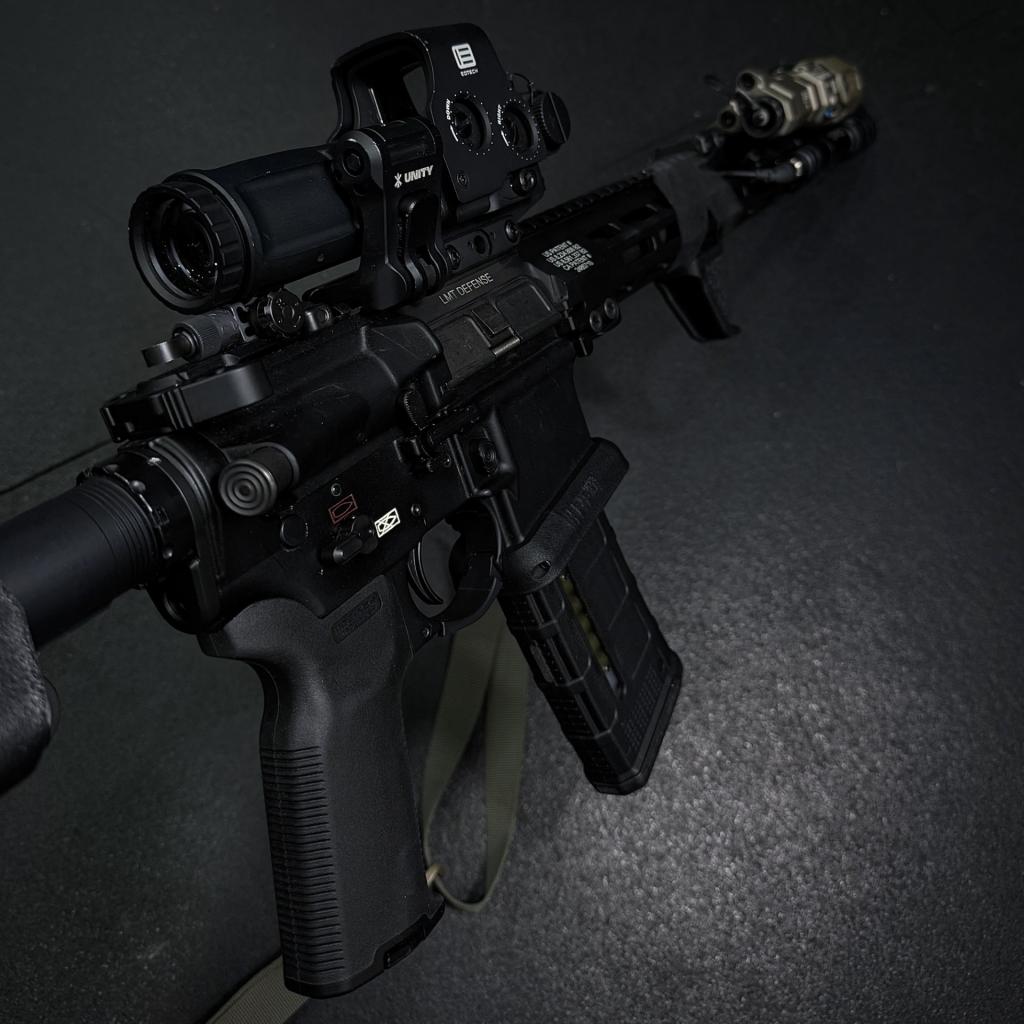
The main optic is the Leupold Mark 5HD 3-18x44 with the Tremor 3 illuminated reticle. The Mark 5HD is one of the best glass values in precision shooting — it runs in the same performance tier as European glass at a fraction of the weight. The 3-18 power range makes this platform genuinely versatile: dialed to 3x it handles close work; at 18x you have everything you need to stretch it. The Tremor 3 reticle is purpose-built for wind and ranging without dialing — it provides holdover, wind holds, and ranging capability built into the glass. When conditions change quickly, you stay on the rifle instead of chasing the turrets.
The optic is mounted in a Badger Ordnance Condition One mount with ACD — the Adjustable Cant Device. The Badger Condition One is a known quantity for precision shooters and military units. It is machined to extremely tight tolerances, it does not shift under recoil, and the ACD allows independent fine-tuning of the cant without adjusting the scope. This matters on the RD-15's elongated receiver, where getting the optic perfectly positioned for eye relief and natural head placement requires precision — not approximation. The Badger mount is how you lock that in permanently.
For a secondary I run a Leupold Delta Point Pro on a 45-degree offset mount. At range this is a scoped, deliberate rifle. The offset red dot gives you a fast heads-up option at close distance without breaking cheek weld or swapping anything. Rotate 45 degrees and you're on the dot. It is the right answer for a precision rifle that may also need to handle a close-range problem.
Precision shooting is a consistency game. The stock setup on this build is entirely focused on removing variables between shots and between positions. The base is a Magpul CTR — adjustable, solid, and a known platform with a strong aftermarket. On top of it sits an Arisaka Limb Saver recoil pad, which absorbs the energy that would otherwise push your cheek off the stock between shots. Combined with a Bag Rest attachment at the toe, the stock locks cleanly into a rear bag with no wandering — you set it once and your position holds across an entire string.
A Magpul Cheek Riser brings the comb to the correct height for the Badger mount's optic position. This is not optional — the Badger Condition One sits high, and without the riser you are craning your neck to find the glass. With it, your eye finds the reticle naturally, your head doesn't move, and your position is the same every single shot. Repeatability is how you build a group. The riser is how you build the repeatability.
The trigger is a Geissele Super Dynamic Enhanced (SDE). Two-stage, clean wall, zero creep. The SDE was designed for precision applications — it gives you a definitive stage to prep against, a break with no ambiguity, and a short positive reset. It is not the lightest trigger you can put in a precision AR but it is one of the most consistent, which is what matters when you are trying to get every shot to break the same way.
Up front the rifle sits on a Harris bipod with an RRS ARCA adapter. The RD-15's integrated 6 o'clock ARCA rail is one of its best features, and the RRS adapter is the correct pairing — it slides and locks anywhere along the ARCA rail, allowing you to adjust bipod position for surface height, slope, and body position without any tools. This is a premium setup because the RD-15 was specifically designed to receive it. The ARCA-to-bipod interface on this platform is as clean as it gets on an AR.
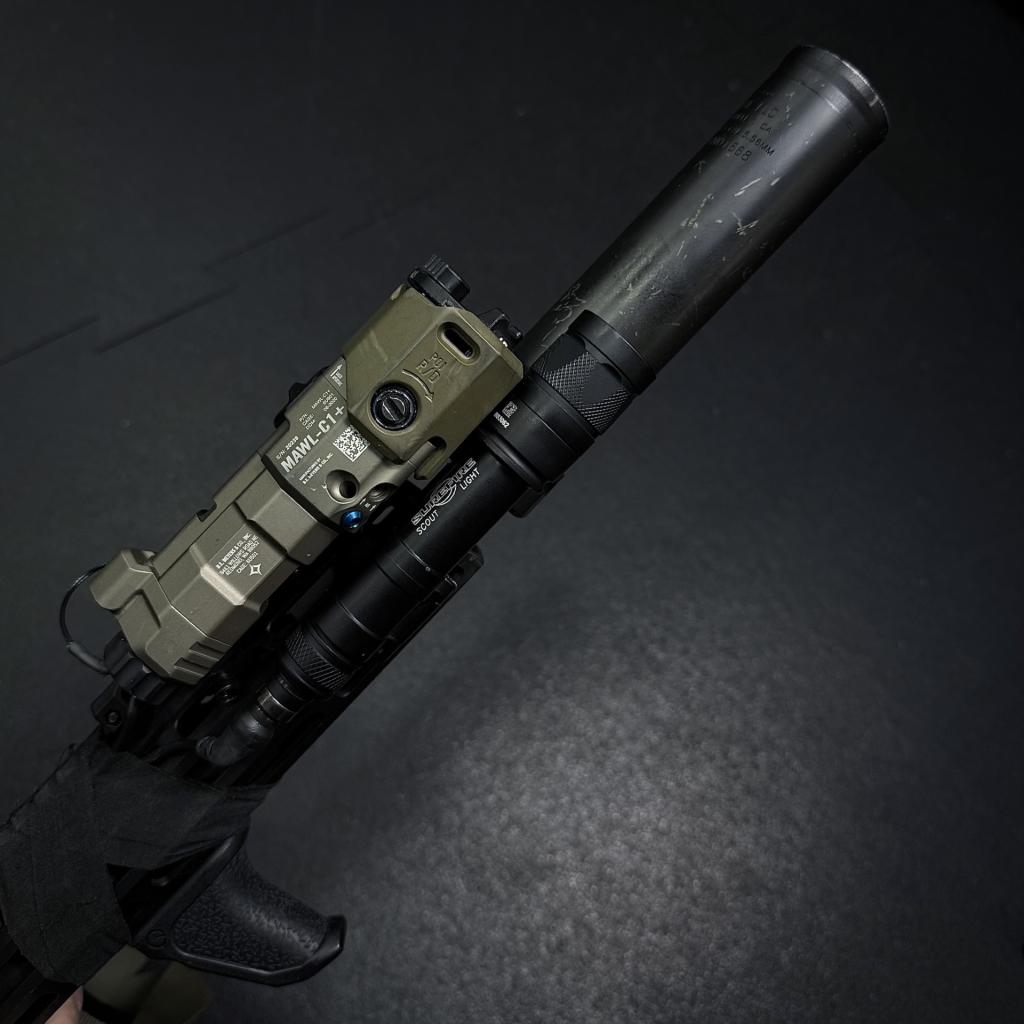
The muzzle device is a SureFire SOCOM Muzzle Brake, which hosts the B&T XH556-Compact suppressor. The brake does two jobs: it reduces muzzle rise so the rifle stays on target for follow-up shots, and it provides the host interface for the can. The B&T XH556-Compact is a straight-to-brake mount design — it threads directly onto the SureFire SOCOM brake with no adapter. Compact, light, and effective. It keeps the overall suppressed length manageable on a 16-inch rifle without sacrificing meaningful sound reduction. The RD-15's sealed gas block design and intermediate gas system mean suppressor back-pressure is handled cleanly — this rifle was engineered to run suppressed from day one.
The light is a SureFire M640 Turbo Scout. The Turbo head throws a tight, high-intensity beam built for long-range target identification rather than the wide flood you'd want on a CQB weapon. At distance you need throw. The Turbo delivers it, and the SureFire platform is proven enough that there is nothing more to say.
| Component | Ridgeline RD-15 LPR |
|---|---|
| Platform | Ridgeline Defense RD-15 LPR |
| Receiver | 7075 T6 Billet, Semi-Monolithic, Type 3 Hard Coat — Extended Upper |
| Barrel | PROOF Research 416R Stainless — 16″ Intermediate Gas, .223 Wylde, 1:7 RH Cut Rifled |
| Handguard | Integrated RRS-Lock ARCA at 6 o’clock, Full M1913 Picatinny top rail, MLOK |
| Trigger | Geissele Super Dynamic Enhanced (SDE) |
| Optic | Leupold Mark 5HD 3-18x44 — Tremor 3 Illuminated Reticle |
| Mount | Badger Ordnance Condition One with ACD |
| Offset Sight | Leupold Delta Point Pro — 45° Offset Mount |
| Stock | Magpul CTR with Arisaka Limb Saver & Bag Rest |
| Cheek Riser | Magpul Cheek Riser |
| Bipod | Harris Bipod — RRS ARCA Rail Adapter |
| Light | SureFire M640 Turbo Scout |
| Muzzle Brake | SureFire SOCOM Muzzle Brake |
| Suppressor | B&T XH556-Compact |
SUN: BY APPOINTMENT
MON: 12PM - 6PM
TUES-FRI: 10AM - 6PM
SAT: 10AM - 3PM